|
|
|
 |
|
|
|
|
|
|
Job Summary
|
Coordinator, Labour Relations
BC Emergency Health Services
Vancouver, BC (Hybrid)
Regular, Full-Time, Permanent, Nonunionized
Internal Applicants: You MUST include your resume and cover letter in the system to complete your application. Please COPY and PASTE your resume and cover letter into the applicable text boxes provided as per the instructions in this Getting Started Guide Brainhunter.com.
The Labour Relations Coordinator reports to the Labour Relations Manager, works in a matrixed human resources environment, and is accountable for participating as a member of the Labour Relations (LR) team to support a cross-functional team of Human Resources (HR) professionals in providing service to operational partners and ultimately patients. Functions as a junior-level member of the LR team. The Coordinator researches, conducts analysis and presents potential solutions, and assists with planning and implementation of decisions/outcomes that are approved and finalized. Builds effective and respectful partnerships and develops an understanding of health sector unionized environment and operational group structures, needs, initiatives and LR-related issues to effectively respond to queries from operational partners and employees and to ensure the consistent application of relevant policies, standards, legislation, collective agreements and terms and conditions of employment.
The Coordinator participates in special assignments, projects and events that have PHSA and Agency wide applications. Provides technical and systems assistance, pulls/maintains data and requests ad hoc reports, , and general support. Provides front-line services to HR, LR Consultants, and operational partners involving the exchange of information in an effort to influence and guide staff through various processes and decision making, and to triage urgent/emergent issues to ensure connection to or response by the appropriate parties.
What you’ll do
- Working under the guidance of the LR Manager, supports the LR team. Organizes, structures, and coordinates processes and meetings required for responding to grievances that are either at or anticipated to be referred for litigation. Optimizes workflows and has total ownership of the grievance response timelines, ensuring that Employer-required actions are made on schedule in accordance with timelines found in the collective agreement or imposed by a third-party arbitrator.
- Supports the LR team by researching information such as case law, standards, legislation and interpretation guidelines, highlighting their relevance to the matter at hand, preparing reports and briefing documents, and drafting formal correspondence for external 3rd parties (i.e. provincial union, HEABC, and Worksafe BC) for LR Manager or designated LR Consultant review; pulling data, requesting ad hoc reports, and completing an initial analysis; and updating records and following up on outstanding action items.
- Triages and/or responds to HR, Employee Services, and Union inquiries by acting as a first point of contact for urgent/emergent requests in order to ensure response and proper linkages within HR are made; providing information and guidance on work practices and processes, application on collective agreement language in low complexity situations, and promotes HR strategies, corporate initiatives and services to facilitate understanding and foster cooperative relationships. Apprises designated partners of departmental issues that will have an impact on existing and/or planned operations.
- Represents the department and acts as a liaison with Payroll and timekeeping, Employee Benefits and Records, IMITS and/or Technology Services, Benefit Carriers, and other Health Authorities as required.
- Works closely with the LR Consultants and HR teams to develop and maintain a broad-based knowledge of all key human resources core specialties. Participates as a team member through attendance and contributing to team meetings, , and provides input into HR processes and projects that have applications throughout the PHSA on an ongoing basis.
- Provides critical analysis and evaluation of data by creating and manipulating spreadsheets, reporting data back to staff for review and correction where applicable. Provides pro-active support and advice to the team including specific metrics that supports improving compliance to and implementation of HR-related programs/initiatives and the advancement of HR best practices, strategies and solutions. Coordinates and/or supports the planning, analyzes and development of recommended processes.
- Develops, maintains and evaluates administrative processes and systems for effective and efficient human resource activities. Evaluates procedures, makes recommendations and implements revised methods to improve HR administration.
- Provides input to the overall goals, objectives, and operations of the WEN team by providing feedback and recommendations and assisting with implementation where appropriate. Administers the Team’s operational processes and participates on projects within LR such as education, essential services preparedness, collective agreement implementation and other initiatives or rollouts to provide consistent, accurate and reliable data to all stakeholders and to support HR Workforce Strategy within PHSA.
What you bring
Qualifications
-
A level of education, training, and experience equivalent to a Bachelor’s degree in HR, plus a minimum of one to three (1-3) years of recent, related experience.
- Demonstrated knowledge of the historic and ongoing impacts of settler colonialism on Indigenous Peoples in social and health contexts, including supported by significant knowledge of Indigenous-specific mandates, including clear understanding of and commitment to eradicate Indigenous-specific racism and discrimination and embed Indigenous Cultural Safety and Humility.
- Demonstrate comprehensive knowledge of the historic and ongoing impacts of settler colonialism and systemic racism on Indigenous Peoples within social and health contexts. This includes understanding how these factors contribute to current health disparities and barriers to care. Show a clear commitment to identifying, challenging, and eradicating Indigenous-specific racism and all forms of discrimination impacting equity-deserving groups within health care settings. This involves familiarity and understanding Indigenous Cultural Safety and Humility recognizing personal biases, institutional barriers, engaging in anti-racism education and training and advocating for systemic change.
- Demonstrated knowledge and understanding of legislative obligations and provincial commitments within Human Resources contexts found in the foundational documents including Truth & Reconciliation Commission’s Calls to Action (2015), In Plain Sight (2020), BC's Declaration on the Rights of Indigenous Peoples Act (2019), United Nations Declaration on the Rights of Indigenous Peoples (UNDRIP), Reclaiming Power and Place Missing and Murdered Indigenous Women & Girls Calls for Justice (2019), the Declaration Act Action Plan and Remembering Keegan: A First Nations Case Study - BC Human Rights Code, BC Anti-racism Act and how they intersect across the health care system.
Core Competencies
- Brings an understanding of the Indigenous specific racism and the broader systemic racism that exists in the colonial health care structure, and has demonstrated initiatives in breaking down barriers and ensuring a safe environment ensuring a sense of belonging to all and informed by Indigenous Cultural Safety.
- Awareness of social, economic, political and historical realities of settler colonialism on Indigenous Peoples and familiarity with addressing Indigenous-specific anti-racism, anti-racism and Indigenous Cultural Safety and foundational documents and legislative commitments (the Declaration Act, the Declaration Action Plan, TRC, IPS, Remembering Keegan, etc.).
Skills & Knowledge
- Models a commitment to service and being an HR business partner within a complex organization. Excellent written, verbal, and interpersonal skills; aptitude to listen, ascertain the needs of clients, and respond accordingly in a timely and efficient manner.
- Demonstrated experience in legal and legislative research.
- Demonstrated ability to build strong, positive relationships and effectively work with various stakeholders and colleagues. Basic knowledge of standard HR policies and practices, collective agreements, and related employment legislation.
- Strong analytical, critical thinking and decision-making skills. Demonstrated ability to collect data from a variety of sources, analyze, produce reports, and make recommendations. Ability to work both independently and as an effective team member.
- Able to multi-task, organize and prioritize workload to manage concurrent multiple projects and successfully meet deadlines. Work well with frequent interruptions. Commitment to the value of continuous learning and an open curiosity for new ideas and innovation. Demonstrated ability to engage others to ensure success in the workplace. Demonstrated knowledge and ability to utilize related equipment and computerized software packages such as the Microsoft Office suite at an advanced level.
- Demonstrates a commitment to beginning and/or continuing their personal learning journey related to Indigenous-specific racism and dismantling systems of oppression, as well as addressing racism more broadly. Shows willingness to articulate and share their learning experiences to contribute to a culture of motivation and inspiration among peers.
- Demonstrates foundational knowledge of the social, economic, and political realities of settler-colonialism and its impacts on Indigenous peoples and equity-deserving groups within social and health contexts. Understands the impact of social determinants of health-on-health outcomes. Shows a commitment to learning about and upholding legislative obligations and provincial commitments outlined in foundational documents such as the Truth & Reconciliation Commission’s Calls to Action (2015), In Plain Sight (2020), BC's Declaration on the Rights of Indigenous Peoples Act (2019), United Nations Declaration on the Rights of Indigenous Peoples (UNDRIP), Reclaiming Power and Place: Missing and Murdered Indigenous Women & Girls Calls for Justice (2019), the Declaration Act Action Plan, Remembering Keegan: A First Nations Case Study, the BC Human Rights Code, Anti-Racism Data Act, and the Distinctions Based Approach
Want work that matters every day?
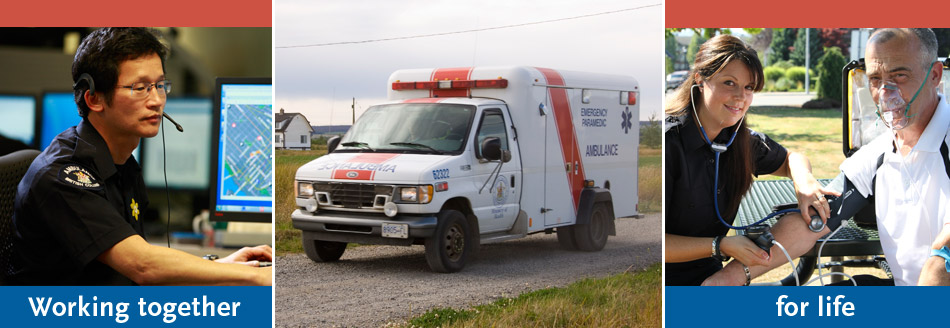
At BC Emergency Health Services (BCEHS), the work you do supports life‑saving care for people across British Columbia. Whether on the front lines or behind the scenes, your role helps ensure patients receive timely, compassionate emergency care when they need it most. BCEHS provides provincial emergency medical and patient transfer services and is part of the Provincial Health Services Authority (PHSA).
Why You’ll Enjoy Working Here
People choose BCEHS because the work is meaningful, the culture is supportive, and there’s room to grow. Here’s what sets us apart:
- Purpose‑driven work that makes a real impact
- Respectful, collaborative teams that value diverse perspectives
- Support for your whole self, including psychological health and wellness
Growth, Learning & Development
We believe learning never stops, and we support your development every step of the way. At BCEHS and PHSA, you’ll have access to:
- 2,000+ learning opportunities, including leadership and technical training
- Indigenous Cultural Safety education, including San’yas Core Health and Anti‑Indigenous Racism Response Training
- Career pathways across BCEHS and PHSA’s province‑wide programs and services
- Opportunities to build new skills, take on challenges, and grow your career over time
Everyone Welcome
We’re committed to fostering a respectful, inclusive workplace and encourage applications from people from equity deserving groups, including Indigenous peoples, black and racialized people, persons with disabilities, and members of 2SLGBTQIA+ communities. If you require accommodation at any stage of the recruitment process, we’re happy to help. Please contact nuta@bcehs.ca.
Indigenous Cultural Safety & Reconciliation
Reconciliation is a shared responsibility at BCEHS, and it’s part of how we show up for patients, colleagues, and communities. Experience in Indigenous cultural safety is valued, and BCEHS also provides access to education, training, and resources to support employees in this important work.
Job Type: Regular Full-Time
Typical Hiring Range: $63,484 - $83,323
The starting salary for this position would be determined with consideration of the successful candidate’s relevant education and experience, and would be in alignment with the provincial compensation reference plan. Salary will be prorated accordingly for part time roles.
Closing Date: June 8, 2026
Requisition #:199393
Contact: nuta@bcehs.ca (Only applications submitted online through this posting will be considered. Please do not send resumes to this email address, as email applications will not be reviewed.)
|
|
|
 |
|
|
|
|